Watercolor painting has a unique magic. Its ability to create luminous, transparent layers and soft, flowing colors has captivated artists for centuries. If you’ve ever admired the delicate glow of a watercolor landscape or the vibrant blend of colors in a floral painting, you might have felt a pull to try it yourself. The good news is that watercolor is an accessible and rewarding medium for artists of all skill levels.
This guide is designed to walk you through the absolute basics of watercolor painting. We’ll cover the essential tools you’ll need to get started, from paints and paper to brushes. Then, we’ll explore fundamental techniques that will form the foundation of your practice. Forget the intimidation of the blank page; our goal is to get you painting with confidence and, most importantly, to enjoy the beautiful process of learning.
Getting Started: Your Essential Toolkit
Walking into an art store can be overwhelming, with countless options for every tool. To start, you only need a few key items. Focus on quality over quantity; a few good tools will serve you much better than a large set of poor-quality ones.
1. Watercolor Paints
Watercolor paints come in two main forms: tubes and pans.
- Pans: These are small, solid cakes of dry paint that are activated with a wet brush. They are typically sold in portable sets, making them perfect for travel or painting on the go. Pans are great for beginners because they are less messy and make it easy to control how much paint you use.
- Tubes: These contain moist, paste-like paint. You squeeze a small amount onto a palette and mix it with water. Tube paints are highly concentrated and offer vibrant colors. They are great for mixing larger quantities of a single color for big washes.
For a beginner, a good-quality pan set of 12-24 colors is an excellent starting point. This will provide you with a wide range of colors to experiment with without being overwhelming.
2. Watercolor Paper
This is arguably the most important supply you will buy. Unlike regular drawing paper, watercolor paper is specifically designed to handle large amounts of water without buckling or falling apart. It comes in different weights and textures.
- Weight: Paper weight is measured in pounds (lb) or grams per square meter (gsm). For beginners, 140 lb (300 gsm) paper is the gold standard. It’s sturdy enough to handle multiple layers of paint and water with minimal warping.
- Texture (or “Tooth”): The texture of the paper is called its tooth. The most common type is cold-press, which has a slight texture. This texture is very forgiving and versatile, making it ideal for beginners. Hot-press paper is smooth and best for fine detail, while rough paper has a very heavy texture.

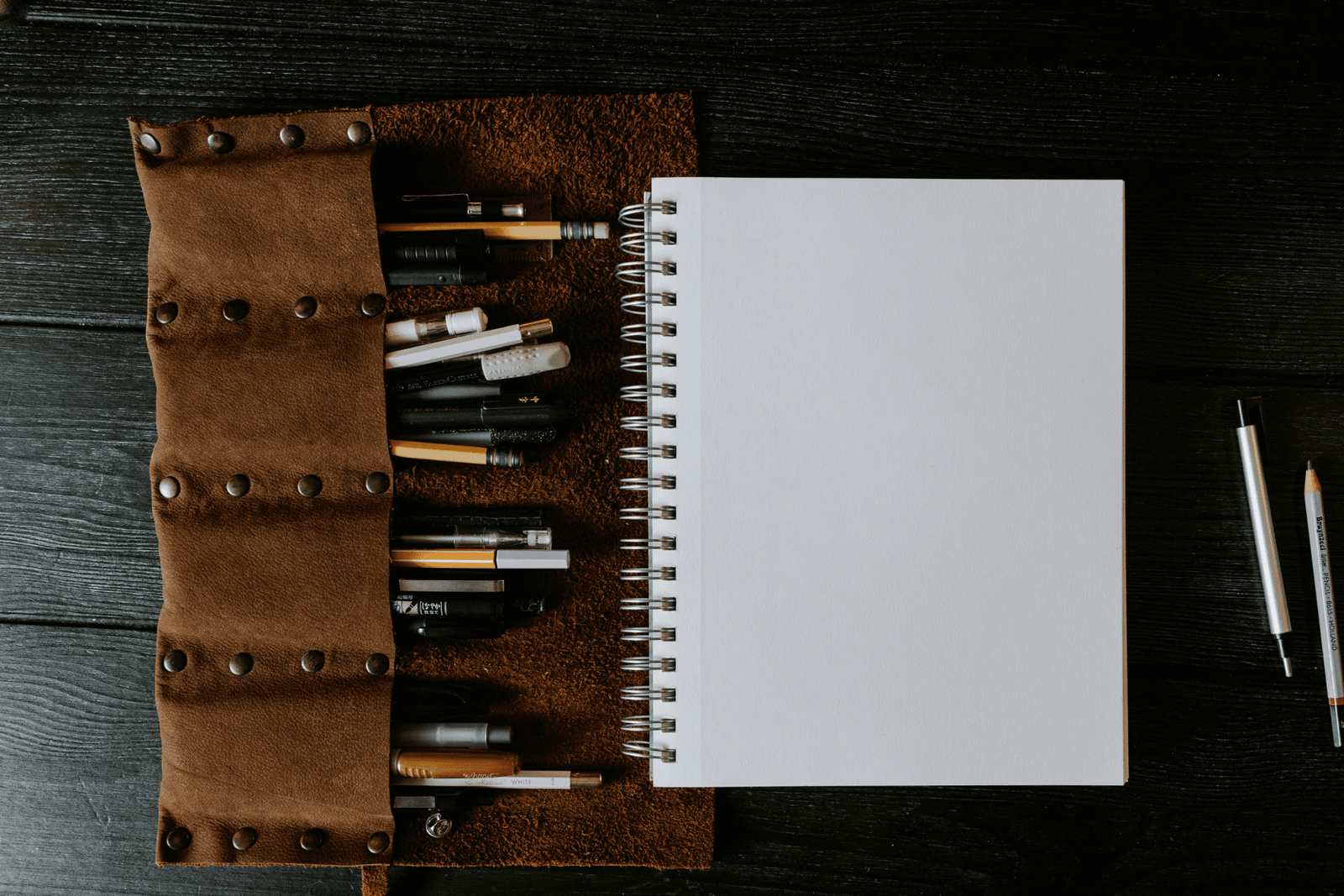


Start with a pad of 140 lb cold-press watercolor paper.
3. Watercolor Brushes
You don’t need a huge collection of brushes to start. A few versatile shapes will cover most of your needs. Brushes can be made from natural hair (like squirrel or kolinsky sable) or synthetic fibers. Modern synthetic brushes are excellent, affordable, and a great choice for beginners.
Here are three essential brushes to start with:
- Round Brush (Size 6 or 8): This is your workhorse. A good round brush will hold a lot of water and can be used for broad strokes or, by using its fine tip, for detailed work.
- Flat Brush (1/2″ or 1″): This is perfect for creating wide, even washes of color for backgrounds or skies.
- Detail Brush (Size 2 or 4): A smaller round brush is great for adding fine lines and small details to your paintings.
4. Other Essential Supplies
- Palette: You need a surface for mixing your paints. The plastic lid of your pan set often works perfectly. A simple ceramic plate will also do the trick.
- Two Jars of Water: Use one jar for rinsing your brushes and the other for clean water to mix with your paints. This keeps your colors from getting muddy.
- Paper Towels or a Sponge: These are essential for blotting excess water from your brush and for lifting color from your paper.
Fundamental Watercolor Techniques
With your tools ready, it’s time to put brush to paper. These foundational techniques are the building blocks of all watercolor painting. Practice them on scrap paper until you feel comfortable.
1. The Wash
A wash is a thin, even layer of color applied to the paper. It’s the most basic and essential technique.
- Flat Wash: This is a uniform layer of a single color. Start by tilting your paper at a slight angle. Load your flat brush with color and make a horizontal stroke across the top of the paper. Reload your brush and make another stroke just below the first, overlapping slightly to pick up the “bead” of paint that formed at the bottom of the previous stroke. Continue this down the page to create a smooth, even field of color.
- Graded Wash: This is a wash that gradually fades from dark to light. Start with a rich, dark stroke of color at the top. For each subsequent stroke, add a little more clean water to your brush, diluting the paint and lightening the color as you move down the page.
2. Wet-on-Wet
This technique involves applying wet paint to paper that is already wet. It’s how you create soft, diffused edges and beautifully blended colors.
- How to do it: First, brush a layer of clean water onto the area you want to paint. While the paper is still shiny and wet, touch your brush loaded with color to the paper. Watch as the paint blossoms and spreads in unpredictable and beautiful ways. You can drop in multiple colors and let them mingle on the paper.
- Best for: Skies, misty backgrounds, and creating soft, abstract effects.
3. Wet-on-Dry
This is the opposite technique, where you apply wet paint to dry paper. This gives you much more control and results in crisp, defined edges.
- How to do it: Simply paint directly onto your dry watercolor paper. This is the technique you’ll use for painting details, defined shapes, and layering colors.
- Best for: Creating sharp lines, painting distinct objects, and adding details on top of a dry wash.
4. Layering (Glazing)
Watercolor is a transparent medium, which means you can build up color and depth by applying thin layers of paint on top of one another. This is called glazing.
- How to do it: Paint a shape or a wash of color. Crucially, you must let this layer dry completely. Once it’s dry, you can paint another transparent layer on top. The color underneath will show through, creating a new, richer color. For example, a layer of blue over a layer of yellow will create green.
- Best for: Adding shadows, adjusting colors, and creating a sense of luminosity and depth.
Tips for Building Confidence
Learning a new skill takes time and practice. Here’s how to stay motivated and enjoy the journey.
- Play and Experiment: Your first few sheets of paper should be dedicated to play. Don’t try to create a masterpiece. Just see what happens when you mix two colors, how much water your brush holds, and what it feels like to lift color with a paper towel. This takes the pressure off and makes learning fun.
- Practice Simple Shapes: Before you tackle a complex landscape, practice painting simple objects like apples, lemons, or basic geometric shapes. This helps you get a feel for how the paint behaves and how to create form and shadow.
- Don’t Be Afraid of Mistakes: Some of the most beautiful moments in watercolor come from happy accidents. If a color bleeds where you didn’t intend, or a wash comes out uneven, don’t panic. See if you can work with it. Every “mistake” is a learning opportunity.
- Follow Along with Tutorials: There are countless free tutorials on YouTube for beginners. Following along with a simple project can be a great way to learn new techniques and build a finished piece you can be proud of.
Conclusion
Watercolor painting is a journey of discovery. It teaches you to let go of control, embrace imperfection, and find beauty in the unexpected flow of color and water. The key is to start simple, be patient with yourself, and, above all, have fun.
Gather your basic supplies, dedicate some time to play with your new tools, and try the fundamental techniques. Don’t worry about creating a perfect painting. Instead, focus on the joy of the process—the feeling of the brush on the paper, the thrill of watching colors blend, and the magic of bringing a blank page to life. Welcome to the wonderful world of watercolor.