Most of us want to do the right thing.
We want to buy clothes that don’t hurt the planet and skincare that is safe for our bodies. Brands know this, and they want our business.
But instead of actually changing how they make things, some companies just change how they talk about them.
This is called “Greenwashing.”
It is a marketing trick where a company spends more time and money on “looking green” than being green.
In a world full of “eco” labels and leaf logos, it is becoming hard to tell the truth about who is using a green filter.
The “Offbeat Buzzword” Trap
The easiest way to catch greenwashing is by looking for words that sound cool but mean nothing in reality.
Unlike the word “Organic” in food, which is strictly regulated, words like “Natural”,Clean”, “Eco-friendly.” and “Green” don’t have any legal definition in fashion or beauty.
A brand can call a t-shirt “natural” because it has 5% cotton in it, even if the other 95% is plastic-based polyester.
A “clean” face cream can still contain ingredients that are harmful to the environment. If a brand uses these words but doesn’t explain the why, they are just doing “greenwashing.”
The “Natural” Aesthetic
Our brain is wired to trust some colors and images.

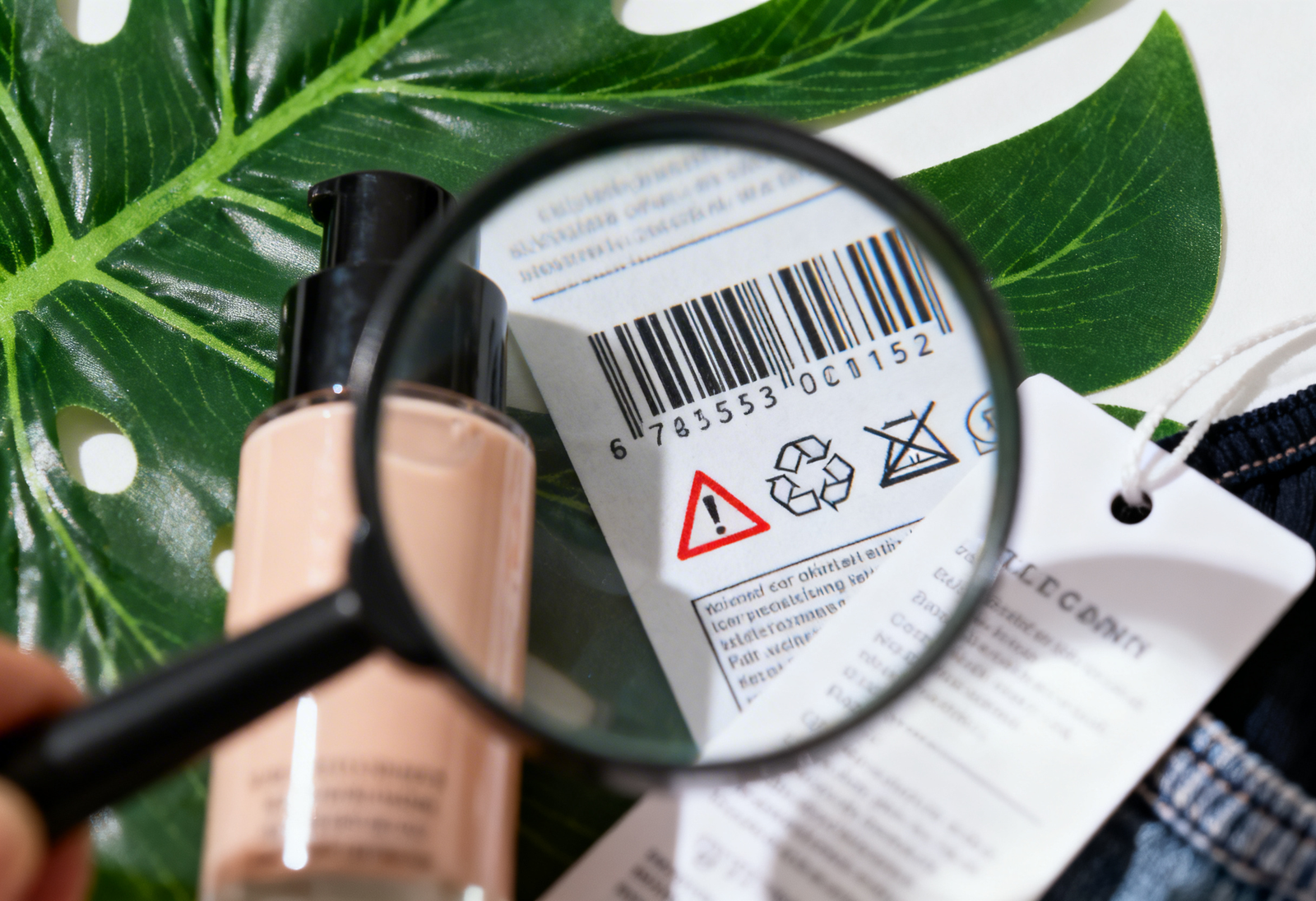
Greenwashing often uses Visual Cues to trick you into thinking a produce is sustainable:
- Packaging: Using cardboard textures, matte finishes, or the color green.
- Imagery: Putting leaves, trees, or flowers on the bottle.
- The “Chemical-Free” Claim: Scientifically, everything is a chemical (including water). Brands that use this phrase are usually trying to scare you into buying their product rather than educating you.
What the Numbers Say: The Scale of Deception
Greenwashing is no more an annoyance; it is a global marketing problem.
A study done by some researchers who researched hundreds of claims about “sustainability” made on the websites found that 42% of these claims were exaggerated, false or deceptive.
Another research found that over thousands of products that claim to be green, out of them over 95% committed at least one “sin” of greenwashing, like making a claim with no proof or focusing on one tiny “green” feature while ignoring a bigger environmental disaster.
A Selective Disclosure (The “Lesser of Two Evils”)
This is when a brand talks about one small thing to hide a major bad thing.
In the Fashion Industry: A brand releases a “Sustainable Collection” which is made of recycled plastic, but collects only 1% of the total stock. Meanwhile, they are still producing thousands of tons of “fast fashion” each day.
Whereas, in an industry like “Beauty” a brand claims that their packaging is “100% Recyclable,” but the product that is inside is full of microplastics which ends up in the ocean the moment you wash your face.
Look for the “Golden Labels”
Since you can’t always trust the brand’s own words, you should look for Third-Party Certifications.
These are like “background checks” for products. If a brand has these, it means an outside organization has verified their claims.
The Sustainability Cheat Sheet
| Certification | What it Proves | Best For… |
| GOTS | Proves the fabric is truly organic and made fairly. | T-shirts, Bedding, Clothes. |
| Leaping Bunny | Guarantees the product was never tested on animals. | Skincare, Makeup, Shampoo. |
| B-Corp | Proves the whole company meets high ethical standards. | Any Brand. |
| FSC | Guarantees the paper or wood was harvested responsibly. | Boxes, Brushes, Furniture. |
| Fair Trade | Ensures workers were paid a living wage. | Cotton, Cocoa, Coffee. |
Ask for the “How” and “Why”
The best way to fight greenwashing is to be a curious customer. If a brand says they are “sustainable,” ask them: How? Where is the proof? Which factory made this?
Real sustainable brands are usually very proud of their work and will have pages of data and maps on their websites showing you exactly how they operate. Greenwashers will just give you a photo of a leaf and a nice quote.
Your money is your vote, make sure you’re voting for the real thing.
Frequently Asked Questions (FAQs)
Is “Vegan” makeup always better for the environment?
Not necessarily; some vegan products use lots of synthetic plastics to replace animal ingredients, which can be worse for the planet in the long run.
Why do brands greenwash instead of just being sustainable?
True sustainability is expensive and difficult; greenwashing is a cheap way to get the “good guy” reputation without changing the business model.
Can I trust a brand if they don’t have any of the “Golden Labels”?
Small, local brands often can’t afford the expensive certification process; in these cases, look for total transparency in their “About Us” section instead.
How do I know if a “Recycled” claim is real?
Look for the GRS (Global Recycled Standard) logo, which tracks the recycled material from the source all the way to the final product.q