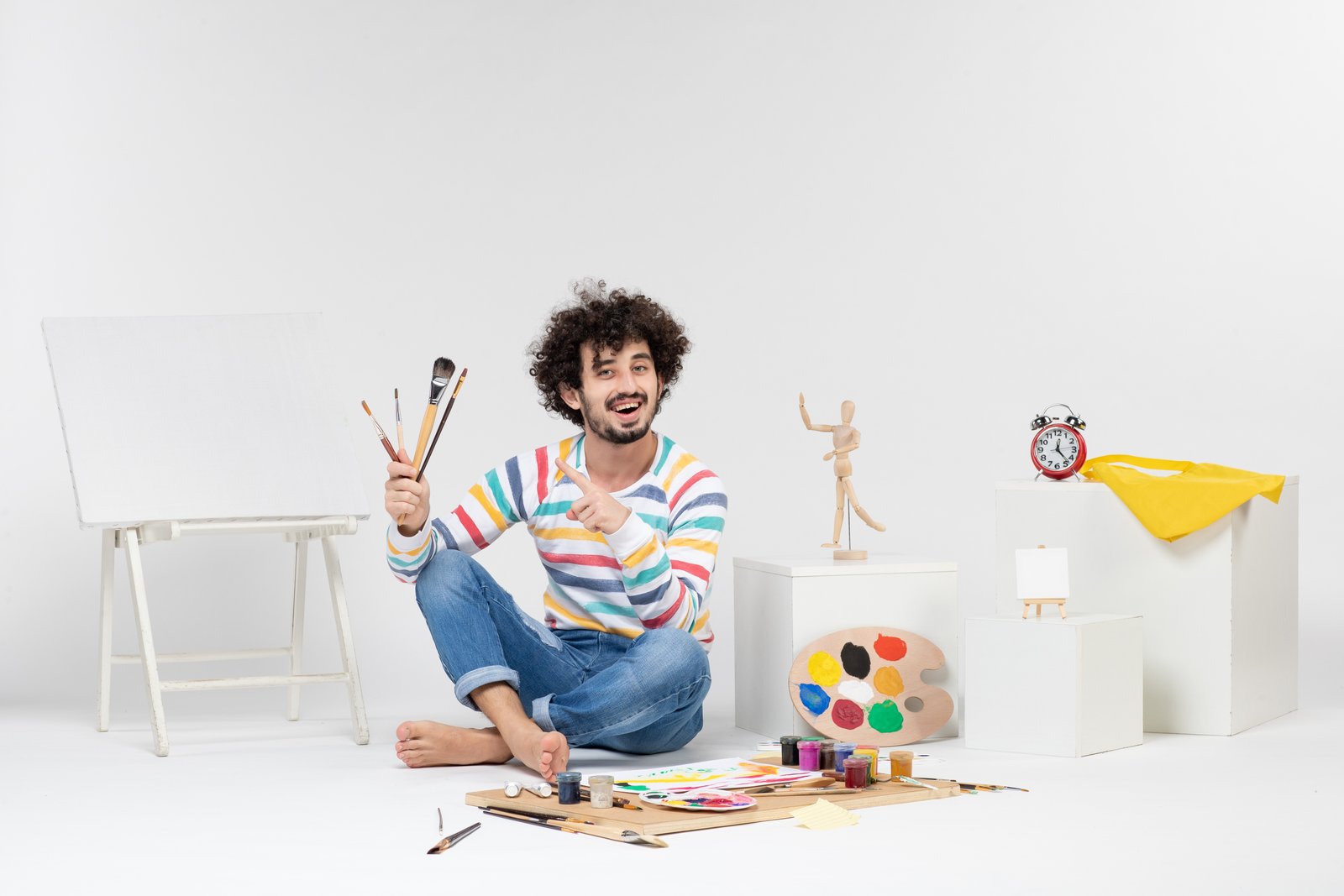
Hobbies don’t reduce stress; they rebuild a person whose stress has been dismantled.
We rarely notice that we are triggered by slow-growing irritation. By the time we notice, stress becomes our companion. When we start to get irritated, difficult conversations and sleepless nights become the outcome.
The only way to get rid of stress is to engage in activities that occupy your time. But sometimes being unproductive leads you to become even more stressed.
In the rat race, one who has the burden of work doesn’t have time for oneself. On the other hand, the population that has time is led to loneliness or isolation.
Hobbies that allow you to engage yourself are helpful in finding yourself again. From a hectic life, picking a hobby allows you to live slowly and remain calm.
Hobbies also become your companion when you have to handle loneliness; they allow you to engage yourself.
The American Psychological Association has documented what most of us already feel in our bodies: that chronic stress doesn’t just make a bad week worse. It accumulates. It compounds. And over time, it doesn’t just exhaust you. It changes you.
What Happens Inside Your Brain When You Pick Up a Hobby
When you pick a hobby, you get relaxed from imagination and lots of overthinking, and it reduces your stress as you don’t overthink to find imagined safety. The right hobby teaches your brain repeatedly, gently, what peace actually feels like.
Neuroscience-specific: When you pick a hobby like gardening or music which calms down your nervous system and reduces cortisol, which is primarily a stress hormone, when you complete that task which doesn’t have any deadline, it provides a dopamine release which builds a sense of appreciation. And all these consistent habits create a flow of self-consciousness that dissolves and time that slows.
Researchers describe a moving shift from distress to eustress (positive stress) from damaging, depleting stress to positive, energising engagement. But it undersells what is actually happening. Because eustress is not just a better stress state. It is what a functioning, feeling, capable person feels like from the inside. When you are in eustress, you are not managing your stress better. You are being yourself again.
Hobbies That Truly Reduce Stress
There is a 2024 review that quietly says everything. It pulled together 11 studies on hobbies and mental health, and what came back were three findings: less depression, better quality of life, and something the clinical language calls ‘social interaction’ but really just means you stop being alone with it.
That last one is the one nobody talks about. Stress pushes people out of rooms quietly. You cancel plans. You go quiet
A hobby doesn’t just give you something to do. It gives you somewhere to belong.”
Organised by what they give your nervous system, choose the one that speaks to what you need most right now.
Grounding & Nature Hobbies
Gardening
When you touch soil, it creates an energy flow, and the soil bacteria (mycobacteria vaccae) help you to lift your mood. Plants, living organisms, provide living feedback which rewards your nurture, which reduces cortisol.
Nature Walking
Just 20 minutes of walks in a green environment allow you free movement within it, which naturally reduces stress hormones. Walking in nature gives your brain a break from rumination mode.
Birdwatching:
Watching the movements of birds patiently, be present. a form of mindfulness in hideousness. The joy of observing something and spotting their movement hits the natural dopamine.
Forest Bathing (Shinrin-yoku)
The Japanese practice of immersing yourself in a forest environment allows you to bath in daylight and greenery. Studies admit it lowers blood pressure, heart rate, and cholesterol and allows a full-body reset.
Social & Community Hobbies
Theatre & Improv
Forces you into the present moment through the scene’s demands. Improv comedy specifically trains the brain to find creative possibilities rather than catastrophising.
Anxiety Reframe
Cooking Classes:
Cooking is a self-engagement skill of creative problem-solving and usually builds social connections. When we cook food for others and share it, it releases oxytocin, the bonding hormone, and creates a connection and lifts your mood through appreciation to rest the soul.
Book Clubs
Reading reduces stress by 68% (University of Sussex study). Pairing it with community discussion adds belonging, one of the strongest safeguards against chronic stress.
Group Music Making
Playing music in a group synchronises brainwaves across participants. The social rhythm creates a shared nervous system calm that individual practice cannot replicate.
Neural Synchrony
Mindful & Soothing Hobbies
Meditation & Breathwork.
When you do 5 minutes of intentional breathing practice of inhales and exhales, allow it to follow a rhythm and provide a sense of being connected within yourself. Breathing provides you with a focused mind, shifts your heart rate and calms down an anxious mind.
Knitting & Crocheting
The repetitive hand movements are neurologically similar to meditation. Many knitters describe a trance-like state of calm. Output is visible, satisfying, and concrete.
Moving Meditation
Watercolour Painting
The unpredictability of watercolour teaches you to release control, one of the core skills for managing anxiety. The process matters more than the result. It allows you to be in the process and release control.
Puzzle & Mind-Engaging Hobbies
Jigsaw Puzzles
Engages both hemispheres, left for logic and the right for spatial intuition. The meditative repetition combined with clear, visual progress creates a powerful de-stressing loop and calms down the whole brain.
Journalling
Journaling allows you to analyse your stress by writing it down on paper, allowing your brain to respond to the stress. Express your worries through pen and paper; it’s a free cognitive resource and makes you feel lighter.
Learning a Language
Builds new neural pathways, increases cognitive reserve, and provides the satisfaction of accumulating a life-changing skill. Progress is always visible and motivating.
Chess & Strategy Games
Occupies the analytical mind completely; there is no room for anxiety when calculating three moves ahead. Competitive play also channels stress into productive challenges.
Creative & Expressive Hobbies
Singing & Music
Singing releases endorphins and oxytocin simultaneously. When we sing aloud in a rhythm, it allows us to release our words in a rhythmic form. Even a humming sound or buzzing sound is helpful in reducing sound.
Dancing


Combines physical exercise, rhythm, self-expression, and often social connection. Dancing is one of the most comprehensive stress relievers we know of, treating body and mind together.
Full-Body Joy
Photography
It trains you to look for beauty in ordinary moments, a cognitive reframe that directly counters the negativity bias that stress amplifies. The world becomes something to notice, not survive. Gratitude Training
Movement & Body Hobbies:
Rock Climbing
Demands total present-moment focus; you cannot worry for tomorrow while deciding where to put your hand next. The risk element paradoxically calms chronic anxiety and forces one to be present.
Swimming
The sensory experience of water, rhythmic breathing, and full-body movement creates a near-meditative state. Blue mind: the calm felt near water is real and measurable.
Yoga & Tai Chi
Intentionally designed to synchronise movement, breath, and awareness. Regular practice literally reshapes brain regions involved in stress and emotional regulation.
Finding the Right Hobby for Who You Are
Personality, age, life situation they all matter. Here’s a guide to finding what might fit you best right now.
The Overworked Professional
High-stress career · Limited time · Mental exhaustion
Your mind never fully switches off. You need something that forces absorption, an activity that gives your prefrontal cortex a genuine rest by directing focus elsewhere. Avoid hobbies that feel like “optimising yourself”.
Rock climbing, pottery, running, music
The Academic Under Pressure
Exam stress · Brain fatigue · Competitive environment
You already spend your days reading and processing. Your hobby should use a completely different part of your brain. Your body, your hands, your senses. Give your cognitive system genuine downtime through physical or creative work.
Dancing, gardening, cooking, swimming
The Lonely & Isolated
Lots of free time · Feeling disconnected · Purposeless days
You don’t need more things to do alone. You need connection and a sense of contribution. Prioritise social hobbies that build a community around a shared interest where belonging happens naturally through activity.
Book Group Classes, Theatre Volunteering
The Busy Parent
Caretaking role · Emotional labour · No “me time”
Your energy goes outward constantly. Your hobby must be something that is unambiguously yours, a non-negotiable boundary of self. It should also be achievable in fragments: 15 minutes here, 20 minutes there.
Journalling, Knitting, Morning Walks, Watercolour
The Elder with Open Time
Slower pace · Rich experience · Seeking meaning
You have what the rushed world craves: time. Your hobby can be slow, deep, and mastery-orientated. You have decades of experience to bring to a creative craft. Hobbies that involve teaching, mentoring, or legacy-building suit you perfectly.
Birdwatching, memoir writing, Tai Chi, chess club
The Digitally Overstimulated
Screen fatigue · Scrolling loops · Shallow attention
Your attention has been trained for constant novelty. You need hobbies that rebuild the capacity for slow, deep focus and that happen entirely off-screen. Physical, tactile, and nature-based hobbies are particularly restorative.
Pottery, forest walks, puzzles, cooking
Final thought
Hobbies aren’t about stress handling; they’re emotional collapse handling. Engaging yourself in new learning allows you to find your better version. Hobbies are a way to calmly slow down from hectic life and, simultaneously, to protect yourself from isolation and depression by keeping yourself busy. Choose a hobby which allows you to have a sense of fulfilment and find your inner child again.
FAQS
1. Do hobbies actually reduce stress, or is that just something people say?
Yes, hobbies reduce stress by engaging your brain in activities. To pick a hobby, give your brain a break from the hustle of life; it allows you to find yourself and be sane again.
2. I’m too stressed to start a hobby. Where do I even begin?
Pick a hobby which is familiar to you, not because it sounds fancy. Hobbies are about doing things which are likely enjoyable; start with tiny activities done freely without any pressure.
3. I’m a parent with zero time for myself. Is a hobby realistic?
Yes, and you probably need it more than most. Even 20 minutes of something that is only yours matters. It’s not selfish. It’s what keeps you from running empty.
4. Can a digital hobby reduce stress, or does screen time make it worse?
Creating something on screen, be it music, writing, or editing photos, can genuinely relax you. Scrolling and reacting to things cannot. The difference is whether you’re making something or just consuming.
5. Social media is stressing me out. Can a hobby actually help?
An offline, physical hobby is the best counter to it. When your hands are busy and you’re fully present somewhere, the pull of the phone just quietly loses its grip.